
Keeping mosquitoes away often feels like an endless battle. You must choose between passive spatial protection and active topical application for reliable mosquito control. The reality of mosquito repellents is simple. There is no single "best" product available on the market. Instead, you only find the right tool for specific environmental conditions. Wind, physical movement, and whether you are indoors or outdoors all change how a product performs.
This guide sets out to clarify your choices. We offer an objective, evidence-based breakdown of electric mosquito repellent liquid vaporizers versus personal and room sprays. We evaluate efficacy, safety, and everyday usability. Our goal is to help you make an informed purchase. You will learn exactly when to plug in a passive device and when to spray your skin.
Mechanism difference: Electric liquids create a continuous airborne shield (spatial repellency), while sprays provide either a localized immediate knockdown (room aerosols) or individual barrier protection (topical/skin).
Environmental dependency: Electric liquids are highly effective in enclosed or zero-wind environments but lose efficacy rapidly in breezy conditions.
The mobility factor: Topical sprays are strictly required for dynamic, on-the-go activities (hiking, yard work) where spatial devices cannot follow.
Cost of ownership: Electric liquids require a low upfront device cost with recurring refill expenses, functioning best as an ongoing seasonal investment for static living spaces.
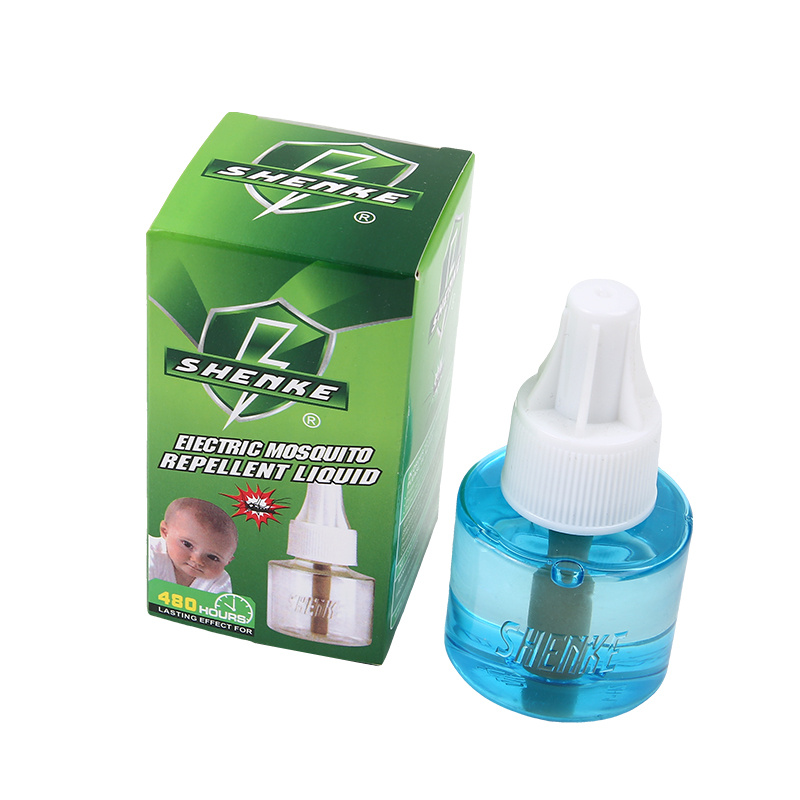
Understanding the science helps you choose the right defense. An Electric Mosquito Repellent Liquid functions as a spatial repellent. It relies on a simple yet highly effective thermal mechanism.
How it works: The device contains a small internal heating element. This heater gently warms a porous wick submerged in the liquid. As the wick heats up, it continuously vaporizes synthetic pyrethroids into the air. Manufacturers commonly use proven active ingredients like prallethrin or allethrin.
The objective: This steady release creates an invisible "no-fly zone" inside your room. The vaporized chemicals disrupt the mosquito's sensory organs. The insects become disoriented. This prevents them from entering the room or landing on targets within the coverage radius. They typically flee the space entirely.
Sprays tackle the mosquito problem through two completely different pathways. They either hide you from the insect or kill the insect on contact.
Skin/Clothing Sprays: These are individual barrier protections. They utilize strong active ingredients like DEET, Picaridin, or Oil of Lemon Eucalyptus. Female mosquitoes hunt humans by detecting exhaled carbon dioxide (CO2) and lactic acid on our skin. Topical sprays effectively mask these chemical markers. You become virtually invisible to their sensors.
Room Aerosol Sprays: These cans deliver an immediate, highly concentrated dose of insecticides into the air. They provide an instant knockdown effect for pests already in the room. However, aerosols lack endurance. They fall to the floor quickly. They cannot provide the sustained, hours-long preventative shield of liquid vaporizers.
Your daily routine heavily dictates which product performs better. Electric liquids provide continuous, hands-free protection. A standard refill typically lasts for 30 to 60 nights, depending on your daily usage hours. The efficacy remains completely stable. As long as you keep the device plugged in, the protection level never drops.
Topical sprays provide episodic protection. They naturally degrade over time. Sweat, friction, and natural evaporation break down the chemical barrier. Effectiveness drops drastically after 4 to 8 hours. You must remember to manually reapply the spray to maintain your protection.
Environmental airflow acts as the ultimate deciding factor between these two formats.
Electric liquids strictly require still air to function. Crosswinds, strong ceiling fans, or open outdoor patios disperse the protective vapor. The chemicals dilute too quickly in the breeze. This renders the electric device entirely ineffective outdoors.
Skin sprays remain completely wind-resistant. The protective chemical barrier sits directly on your skin or clothing. A strong breeze does not blow the DEET off your arm. This makes topical application mandatory for open environments.
Electric liquid vaporizers secure a defined volume of space. A single plug-in device typically covers a standard bedroom. This equates to approximately 100 to 150 square feet. Anyone sleeping inside this zone enjoys equal protection.
Sprays only protect the exact surface area you apply them to. If you spray your arms but miss your ankles, mosquitoes will quickly exploit that gap. You must achieve total coverage for true protection.
Comfort heavily influences consumer habits. Many people abandon effective repellents simply because they hate how they feel.
Electric liquids excel in user comfort. They are largely odorless and completely smokeless. They leave absolutely no sticky residue on human skin. You do not even notice they are running. This makes them ideal for sleeping environments and quiet living spaces.
Sprays often struggle in this category. They frequently carry strong, lingering chemical odors. DEET-based formulas often leave a noticeable greasy film on your skin. Furthermore, heavy topical sprays can permanently damage synthetic fabrics, watchbands, and plastics.
You must balance effectiveness with chemical exposure limits inside your home.
Standard electric liquid vaporizers hold EPA registrations for indoor use. However, they do release continuous low-dose chemicals into your breathing air. Health experts recommend maintaining good ambient ventilation. Leaving a window slightly cracked ensures fresh air circulation. You should also keep these vaporizers away from direct proximity to infant cribs or open fish tanks.
Skin sprays require direct dermal chemical absorption. Products featuring Picaridin and DEET undergo rigorous vetting by global health organizations. They are safe when used as directed. Despite this, many users understandably prefer to minimize daily chemical application to their skin when relaxing safely inside their own homes.
Evaluating long-term spending reveals distinct financial profiles for both solutions. We can break down the financial commitment required for standard household protection.
Electric liquid systems require a minor initial hardware investment. You must buy the plug-in heater unit, which usually costs between $5 and $15. After this, you face ongoing liquid refill expenses. A multi-month pack of refills typically runs between $10 and $20. It serves as an ongoing seasonal investment.
Sprays operate as a single-purchase consumable. A standard bottle costs between $7 and $15. You face zero upfront hardware fees. However, high-frequency users will empty these bottles rapidly. A family applying spray daily during peak summer will burn through multiple bottles per month.
| Cost Category | Electric Liquid Vaporizers | Topical / Aerosol Sprays |
|---|---|---|
| Hardware Purchase | $5 - $15 (One-time) | $0 (None required) |
| Consumable Refills | $10 - $20 (Per 2-3 months) | $7 - $15 (Per bottle) |
| Lifespan per Unit | 30-60 Nights (8 hours/night) | Depends heavily on user frequency |
Time and mental effort represent a hidden maintenance cost. A quality Electric Mosquito Repellent Liquid offers a true "set-and-forget" model. You plug it in, and the room stays protected. Many modern homeowners pair these vaporizers with automated smart plugs. You can program the device to activate only at dusk. This drastically optimizes the refill lifespan with zero daily effort.
Sprays require zero technical maintenance. They do not need electricity. However, they demand active manual effort every single time you need protection. You must stop what you are doing, locate the bottle, and physically apply the chemical to your skin or the room.
Certain spaces heavily favor passive spatial technology. You should deploy liquid vaporizers in these scenarios:
Bedrooms and Nurseries: They provide uninterrupted sleep. You wake up bite-free without coating your skin in chemicals every night.
Enclosed Patios & Living Rooms: They thrive in static environments. As long as the airflow remains controlled, the vapor shield holds strong.
Long-term Convenience: They suit users who want passive, automated daily protection. You never have to think about applying repellent inside your house.
Active lifestyles and hostile environments require chemical barriers. Keep topical sprays ready for these situations:
Dynamic Outdoor Activities: Hiking, camping, and intense sports demand mobility. Spatial devices cannot follow you down a trail.
High-Wind Environments: Open yards, beaches, or breezy decks instantly destroy vapor shields. Sprays remain securely attached to your skin.
Immediate Infestation Clearing: Aerosol room sprays excel at clearing heavily infested spaces fast. You can bomb a garage with aerosol to kill active mosquitoes before walking inside.
You do not have to choose just one. The most effective mosquito control strategies combine multiple tools. We highly recommend a layered defense approach. You should use electric liquids to sanitize and protect your home's interior baseline. Treat your indoor living spaces as secure zones. Then, reserve your topical sprays exclusively for venturing outdoors.
| Summary Chart: The Right Tool for the Right Scenario | ||
|---|---|---|
| Scenario | Recommended Product | Why It Works Best |
| Sleeping Indoors | Electric Liquid Vaporizer | Odorless, zero skin residue, continuous 8-hour coverage. |
| Hiking or Sports | Skin Spray (DEET/Picaridin) | Moves with you, resists wind, directly masks human scent. |
| Open Breezy Patio | Skin Spray (DEET/Picaridin) | Vaporizers fail in wind; skin spray ignores weather conditions. |
| Infested Garage Entry | Aerosol Room Spray | Instant knockdown of swarming mosquitoes upon entry. |
The great "effectiveness" debate truly boils down to a question of environment. Neither product inherently outperforms the other in every situation. Electric liquids clearly win for static, indoor, and semi-enclosed convenience. They offer passive, odorless peace of mind. Conversely, topical sprays win hands-down for mobility, active outdoor use, and windy environments.
Before you spend any money, carefully audit your primary "bite zones." Determine exactly where mosquitoes bother you the most. If you get bitten while sleeping, fix your indoor air space. If you get bitten while gardening, focus on your skin.
For complete, round-the-clock protection, adopt a hybrid strategy. We strongly recommend pairing a high-quality electric liquid vaporizer for your bedroom with a reliable Picaridin-based spray stationed near your entryway. This combination ensures you stay comfortable inside and fully protected outside.
A: Yes, these devices fall well within established safety margins when used correctly. Manufacturers design them for standard-sized bedrooms. They release extremely low doses of synthetic pyrethroids. You should maintain slight ambient ventilation. Simply keep a window cracked open or a door slightly ajar. Avoid placing the vaporizer directly next to a baby's crib or a fish tank. This simple setup ensures continuous protection without compromising indoor air quality.
A: They are highly inefficient outdoors. Standard electric vaporizers require still air to maintain their protective shield. Even a slight breeze disperses the active ingredients immediately. You can only use them successfully on heavily sheltered patios featuring zero wind. For open outdoor spaces, you need specialized butane-powered spatial repellents. These alternative systems use higher heat dispersion to fight mild breezes effectively.
A: No, ultrasonic devices do not work. Scientific consensus heavily debunks them. Female mosquitoes bite humans, but their hearing is practically non-existent. They simply do not respond to high-frequency sounds. Male mosquitoes hear well, but they do not bite. Chemical or liquid vaporizers remain the only proven spatial deterrents. Save your money and rely on EPA-registered active ingredients instead of ineffective sound waves.
A: No, higher concentration does not mean stronger protection. According to the AMCA and CDC, higher concentrations in topical sprays merely extend the duration of protection. A 30% DEET spray lasts longer than a 10% version, but it does not repel mosquitoes more aggressively. Electric liquid vaporizers bypass this issue entirely. They provide a continuous chemical output, delivering maximum protective strength as long as they remain powered on.