
Traditional indoor mosquito control often fails miserably. Smoky coils irritate your lungs. Sticky sprays leave an uncomfortable chemical residue on your skin. People clearly need passive, continuous protection for their living spaces. Today, the modern standard for indoor spatial repellency is the Electric Mosquito Repellent Liquid. It offers a cleaner, hands-free approach to keeping biting insects at bay. However, these systems rely on vaporized synthetic chemicals. You must balance efficacy and respiratory safety through specific usage parameters. In this guide, you will learn exactly how these vaporizers work on a chemical level. We will explore the active ingredients they use and how you can optimize their placement. You will also discover critical safety protocols for protecting your family and pets.
Electric liquid repellents utilize a calibrated heating element to vaporize active ingredients, creating a "no-fly zone" rather than an immediate kill zone.
The primary active ingredients are synthetic pyrethroids (e.g., Prallethrin, Transfluthrin), which are highly effective against mosquitoes but require proper room ventilation.
Success depends entirely on device placement, room size limits, and timely replacement of the liquid mosquito repellent refill.
While safe for general human use according to regulatory standards, strict precautions are necessary around specific pets (particularly cats) and aquatic life.
Understanding how your defense system operates helps you use it better. A standard mosquito repellent vaporizer relies on a fascinating combination of physics and basic thermodynamics. It transforms a stationary liquid into an invisible, protective shield across your room. The entire operation breaks down into three distinct phases.
The process begins inside the liquid reservoir. Every refill bottle contains a specialized porous wick. Manufacturers typically construct this wick from carbon, compressed wood powder, or fiberglass. The wick sits submerged in the chemical solution. Through capillary action, the wick draws the fluid upward. It defies gravity. The liquid travels through microscopic pores until it reaches the exposed top. This upward movement ensures a continuous supply of the solution reaches the heating element.
Once the liquid reaches the top of the wick, the hardware takes over. The core of any reliable unit is a PTC (Positive Temperature Coefficient) ceramic thermistor. When you plug the unit into a wall outlet, this ceramic element heats up quickly. A PTC heater is uniquely self-regulating. It maintains a highly precise temperature range. Most units hover between 130°C and 150°C. This specific temperature is critical. It provides enough heat to volatilize the active chemicals into the air. However, it stays cool enough to prevent the liquid from catching fire or burning. Burning the liquid would create toxic smoke and ruin the repellent effect.
The final step happens in the air around you. The heated chemical rises from the device as an invisible vapor. This vapor binds naturally with ambient air currents inside your room. As it spreads, it forms a protective canopy. Mosquitoes find human hosts by detecting our breath and sweat. Specifically, they track carbon dioxide and lactic acid. The dispersed vapor interrupts the mosquito's sensitive olfactory receptors. It effectively blinds them to your presence. They become disoriented and cannot locate you in the room.
The liquid inside the bottle does the heavy lifting. While the hardware disperses the chemical, the chemical itself stops the insects. Formulators rely heavily on specific synthetic compounds to achieve maximum results. You need to understand what you are introducing into your indoor air.
The pest control industry heavily favors synthetic pyrethroids. Chemists originally designed these compounds to mimic natural pyrethrins found in chrysanthemum flowers. Today, they remain the undisputed industry standard for any high-quality indoor mosquito liquid.
Transfluthrin and Prallethrin are the two most common active ingredients. Manufacturers choose them for two specific reasons. First, they possess high volatility at relatively low temperatures. This makes them perfect for low-heat electric vaporizers. Second, they deliver a fast-acting knockdown effect on flying insects. When a mosquito flies into the vapor cloud, the chemical attacks its nervous system immediately.
You might wonder about human safety. Extensive research supports their usage. Guidelines from the World Health Organization (WHO) and the Environmental Protection Agency (EPA) classify these specific pyrethroids as having low mammalian toxicity. When you use them according to the package directions, your body easily metabolizes and excretes the trace amounts inhaled. They pose very little risk to healthy human adults.
Many consumers seek plant-based options today. You can find refills advertising Citronella, Eucalyptus, or Lemongrass oils. However, these natural alternatives present significant functional challenges. They lack the standardized efficacy data of synthetic pyrethroids. Furthermore, essential oils evaporate at highly unpredictable rates. They often burn away too quickly or fail to disperse evenly across a large room. While they smell pleasant, they rarely provide complete protection against aggressive mosquito species.
The active pyrethroid usually accounts for less than 2% of the total liquid volume. The remainder consists of carrier solvents. Manufacturers commonly use highly purified, deodorized kerosene. This solvent ensures the pyrethroid remains stable during months of storage. It also dictates how smoothly the liquid travels up the wick. Some newer formulations use water-based solvents to reduce volatile organic compound (VOC) emissions. Both types serve purely as a delivery vehicle for the active chemical.
| Ingredient Type | Primary Components | Efficacy Level | Evaporation Rate |
|---|---|---|---|
| Synthetic Pyrethroids | Transfluthrin, Prallethrin | High (Disorients & Knocks down) | Consistent and calibrated |
| Natural / Plant-based | Citronella, Eucalyptus Oil | Low to Moderate | Rapid and unpredictable |
| Solvents | Deodorized Kerosene, Water | N/A (Carrier agent only) | Matches the active ingredient |
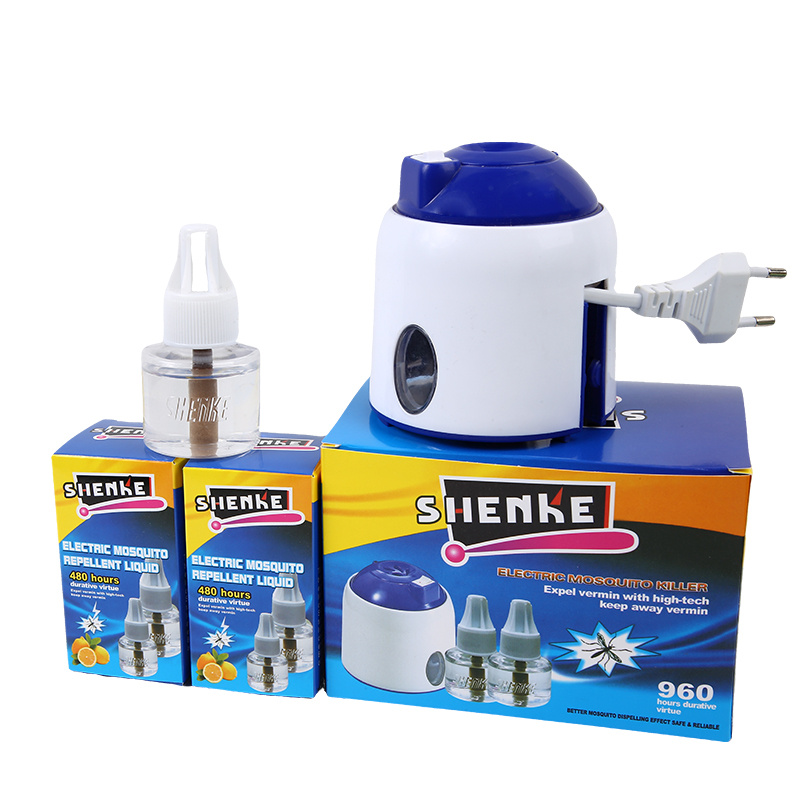
Yes, these systems work exceptionally well. However, user expectations often misalign with reality. You need to understand the difference between spatial repellency and complete extermination. A plug-in electric mosquito repellent device is not an instant bug zapper.
The primary function of this technology is spatial repellency. The vapor creates an environment where mosquitoes refuse to fly. It disorients them. They lose their appetite for blood. They typically retreat to the ceiling or fly out of the room entirely. Knockdown refers to the actual paralysis and death of the insect. Knockdown only occurs if the mosquito remains trapped in a highly concentrated, enclosed environment. If you want a peaceful night of sleep without bites, spatial repellency is all you actually need.
Several environmental factors determine whether you get bitten. You must control these variables to maximize your device's potential.
Room Size Limits: Standard units are rated to cover roughly 100 to 150 square feet. If you place one unit in a massive open-concept living room, the vapor concentration will drop. The chemical simply dilutes too much to be effective. For large master bedrooms, you should deploy multiple units in opposite corners.
Airflow Dynamics: Airflow is your biggest enemy. Strong drafts blow the protective vapor away. If you point a high-speed floor fan directly at the wall outlet, the device will fail. Open windows catching a stiff breeze will also dilute the concentration. Position the unit away from strong air conditioning vents.
Activation Time: Impatience leads to bites. These vaporizers do not offer instant protection. You cannot plug it in and immediately turn off the lights. The PTC heater needs time to warm the liquid. The vapor then needs time to fill the room. Always activate the unit 30 to 60 minutes before you plan to occupy the space.
Bringing vaporized chemicals into your home requires respect for the technology. While major health organizations deem them safe for general use, you must follow strict operational boundaries. Ignoring safety guidelines can lead to poor air quality or accidental harm.
Every user faces the same core dilemma. Keeping all windows and doors tightly shut maximizes mosquito knockdown. The chemical concentration peaks, and bugs drop quickly. However, a sealed room traps the vapor. Breathing concentrated pyrethroids all night reduces your indoor air quality. We call this the ventilation paradox.
You can easily solve this issue. Practice the "partially open door" approach. Crack your bedroom door open a few inches. Alternatively, open a window just a sliver. This strategy allows fresh oxygen to circulate. It prevents the chemical from reaching irritating levels. Fortunately, the vaporizer still generates enough localized concentration near your bed to keep mosquitoes completely disoriented.
Human livers process pyrethroids easily. Certain animals cannot say the same. You must exercise extreme caution if you own specific types of pets.
Feline Toxicity: Cats are uniquely vulnerable to pyrethroids. Felines lack the specific liver enzyme needed to metabolize these synthetic chemicals safely. Prolonged exposure in a poorly ventilated room can cause tremors, drooling, or neurological distress in cats. If you own a cat, maintain excellent ventilation or explore alternative physical barriers.
Aquatic Pets: Fish and aquatic invertebrates are highly sensitive to airborne pesticides. Never plug a vaporizer near a fish tank. The chemical can settle on the water's surface and poison the tank.
Child Placement: Toddlers are naturally curious. A plugged-in unit looks like a toy. Furthermore, the ceramic heater gets hot enough to cause mild burns. The liquid inside is toxic if swallowed. Always plug the unit into elevated outlets. Keep them completely out of reach of crawling infants.
Healthy lungs handle these vapors without issue. However, individuals with chronic respiratory conditions must tread carefully. If you suffer from severe asthma, chronic bronchitis, or intense chemical allergies, airborne solvents might trigger an episode. Always consult a physician or allergist before introducing any vaporized pest control into your sleeping environment. They might recommend physical mosquito nets over chemical spatial repellents.
Not all devices offer the same level of safety and reliability. The market is flooded with generic, poorly manufactured units. You must know what features separate a premium plug in mosquito repellent from a potential fire hazard. Make your purchasing decisions based on hardware quality and refill economics.
Hardware safety should be your top priority. Look exclusively for devices carrying a UL certification or equivalent regional safety marks. These certifications prove the device passed rigorous electrical testing. Focus on the internal heater. Ensure the packaging specifically mentions a PTC ceramic heating element. Cheaper wire-based heaters degrade over time. They can easily overheat, melt the plastic casing, and cause severe wall fires. High-quality plastics also matter. The outer shell should be made from flame-retardant materials.
The device itself is cheap. The recurring cost lies in the chemical replacements. Before buying a system, evaluate the availability of the liquid mosquito repellent refill. Many major brands use proprietary thread sizes on their bottles. They intentionally lock you into buying their expensive name-brand refills. Look for systems that accept universal bottle threads. This gives you the flexibility to purchase bulk refills from various manufacturers, drastically lowering your seasonal expenses.
Modern iterations of these vaporizers include helpful technology to improve user experience. Seek out units offering these upgrades:
Timers and Smart Plugs: Human memory is flawed. You will inevitably forget to unplug the device in the morning. Units featuring automatic 8-hour or 12-hour shutoff timers are invaluable. They prevent you from wasting liquid during the day. They also prevent the room from becoming over-concentrated with chemicals.
Adjustable Intensity Settings: Some rooms are larger than others. Premium devices feature low, medium, and high heating switches. You can increase the temperature for a large living room. You can lower the intensity for a small nursery. This customization maximizes both safety and chemical efficiency.
Rotatable Prongs: Wall outlets are sometimes installed sideways or upside down. A vaporizer bottle must always remain perfectly upright. If it tilts, the liquid will leak and damage the internal heater. Devices with 90-degree rotating plug prongs solve this frustrating issue easily.
An electric liquid vaporizer remains the most effective passive indoor solution for mosquito control on the market today. It replaces the choking smoke of coils with a clean, invisible shield. However, its success demands respect for the underlying chemistry. You must manage room ventilation properly to balance safety and bug repellency. Always assess your room size before deciding how many units to deploy. Keep an eye on pet compatibility, specifically protecting cats and fish. Finally, invest in certified hardware that supports accessible, cost-effective refills. By following these operational guidelines, you can reclaim your home and sleep peacefully without the constant threat of bites.
A: Yes, you can safely leave it plugged in overnight, provided you maintain proper room ventilation. Keep a door slightly ajar or a window cracked to ensure fresh air circulation. Manufacturers typically recommend a maximum of 8 to 12 hours of continuous use to prevent chemical over-concentration.
A: A standard 45ml refill bottle typically lasts between 30 and 45 nights. This estimate assumes you run the device for about 8 hours each night on a standard intensity setting. Using the device on a higher heat setting or running it 24/7 will deplete the liquid much faster.
A: Regulatory bodies approve pyrethroid vaporizers for general indoor use. However, pediatricians often recommend avoiding direct chemical vapor exposure for infants under 6 months old. Their respiratory systems are still developing. Physical barriers, like tightly fitted mosquito nets over cribs, remain the preferred zero-risk alternative for newborns.
A: Several common culprits cause device failure. You might not have waited the required 30 to 60 minutes for the vapor to spread. The room might be too large for a single unit. Alternatively, an open window or strong AC fan might be blowing the protective vapor away from you.