
You desperately want a good night's sleep without annoying mosquito bites. Yet, solving this problem often introduces a new health dilemma. Plugging a chemical vaporizer into your bedroom wall feels unnatural to many people. Skeptics often describe this practice as huffing pesticides continuously in a closed space. We intuitively fear inhaling vaporized chemicals while our bodies try to rest and recover.
Plug-in repellents remain globally popular because they offer incredible convenience. You simply plug them in and forget about them. However, differing regional regulations and varying health standards spark intense debate today. Many western countries restrict indoor pesticide use heavily. Meanwhile, tropical regions rely on them daily. This creates confusion about their actual indoor safety.
We need an evidence-based, objective evaluation of these devices. We will examine the active ingredients and physiological risks closely. You will learn practical frameworks to manage indoor air quality. This guide helps you decide if, when, and exactly how you should use these devices in your sleeping quarters safely.
Ingredient Reality: Most conventional liquid repellents rely on synthetic pyrethroids (like prallethrin or allethrin), which are effective neurotoxins for insects but carry cumulative inhalation risks for mammals.
Vulnerable Populations: Continuous indoor usage poses disproportionate risks to infants (who have faster respiratory rates) and pets (due to smaller body mass and metabolic differences).
Ventilation vs. Efficacy Paradox: Safe usage requires airflow, but excessive airflow (like high-speed fans) can disperse the vapor, neutralizing its mosquito-killing efficacy.
The Verdict: Running a chemical electric mosquito repellent liquid 24/7 in a closed, air-conditioned bedroom is not recommended. Safe use requires strict time-boxing, distance from the bed, and proper ventilation, or switching to physical/botanical alternatives.
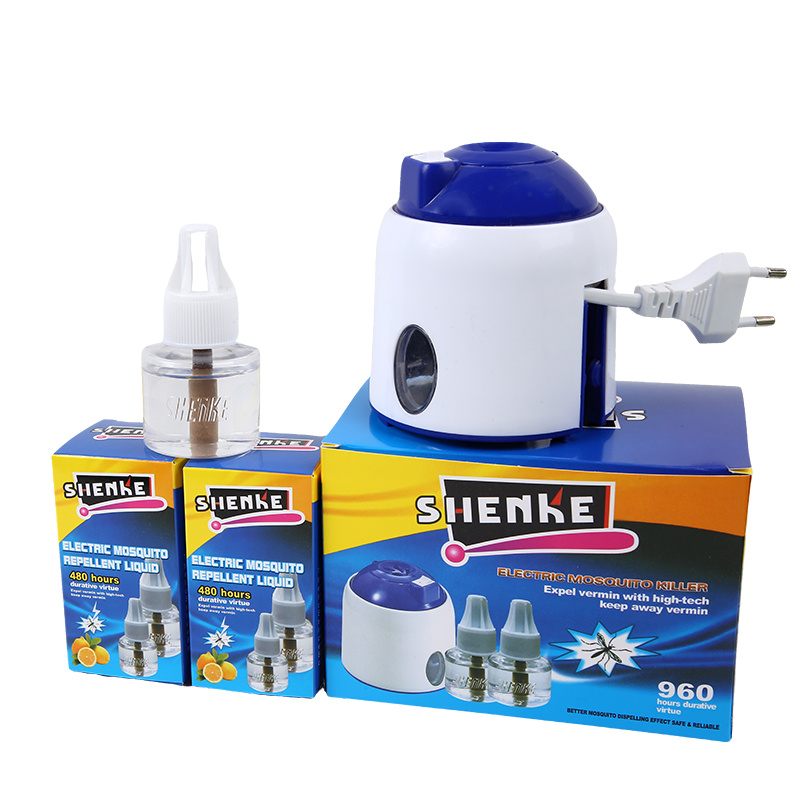
Understanding the actual mechanics of these devices is crucial. You plug the unit directly into a standard wall outlet. Inside the plastic housing sits a small ceramic heating element. This heater gently warms a porous wick submerged in a chemical bottle. Capillary action draws the fluid upward. The heat continuously aerosolizes the liquid into your bedroom air. Brands often market these products as convenient "280 Hr Refills." They slowly release a steady, invisible chemical stream over many consecutive days and nights.
You must know exactly what compounds enter your lungs. The vast majority of these devices disperse synthetic chemical agents. Standard formulas heavily utilize pyrethroids. Common ingredients include transfluthrin, prallethrin, and sometimes allethrin. Older or poorly regulated models might even contain DEET. These chemicals act as highly effective neurotoxins against insects. They disrupt the sodium channels in a mosquito's nervous system. This causes rapid paralysis and eventually death for the insect.
Manufacturers base their safety claims on one primary assumption. They state the chemical concentration is low enough to be harmless to human adults. A single breath contains microscopic amounts of the neurotoxin. However, we must challenge this premise regarding cumulative, closed-room exposure. Breathing a low dose over 280 continuous hours completely changes the safety math. Your body processes these aerosolized toxins nonstop while you sleep. The active compounds build up in the ambient air. We must carefully evaluate if a Electric Mosquito Repellent Liquid remains safe under these extended indoor conditions.
Prolonged inhalation of vaporized pyrethroids causes documented physiological side effects. Many users experience subtle symptoms without connecting them to the plug-in device. You might wake up experiencing mild throat irritation. Dry coughing frequently occurs in heavily saturated rooms. Asthmatics often suffer the most in these environments. Their sensitive airways react quickly to chemical micro-particles. Healthy users also report morning headaches and mild nausea. These symptoms strongly indicate mild neurological and respiratory stress from overnight chemical exposure.
Clinical realities back up these everyday consumer experiences. We can look at standard toxicology models for clear answers. For example, recent PubMed studies examined inhalation risks regarding 1.6% prallethrin formulations. Researchers placed mammalian test subjects in controlled environments. They found that continuous inhalation over 48 to 72 hours triggers noticeable biological changes. The exposure initiates oxidative stress at a cellular level. It also causes mild inflammatory responses in mammalian blood and tissue. The primary danger is not acute poisoning. Instead, the risk lies in cumulative biological stress placed on your immune system.
Modern housing designs compound this health risk significantly. We call this the A/C Factor. We usually sleep in tightly sealed, air-conditioned bedrooms today. We keep doors closed and windows locked. The chemical vapor cannot naturally escape the room. The air conditioning unit simply recirculates the synthetic pyrethroids endlessly. You end up trapping the aerosolized particles inside your sleeping space. This closed loop turns a supposedly mild exposure into a highly concentrated one. The vapor density increases hour by hour.
Healthy adults might process low chemical loads efficiently. However, vulnerable household members face entirely different risks. Infants and toddlers represent the most at-risk demographic. We must look at the biological math here. Babies possess a much faster respiratory rate than adults. A newborn breathes 30 to 60 times per minute. An adult breathes roughly 12 to 20 times per minute. Babies inhale a significantly higher volume of aerosolized chemicals relative to their tiny body weight. This biological reality leads to frequent symptoms. Infants show an increased risk of allergic reactions. They experience eye irritation, skin rashes, and respiratory distress more easily in vaporized rooms.
Household pets share this exact vulnerability. Cats, dogs, and birds face unique metabolic challenges. Pets possess much smaller body sizes overall. Furthermore, they lack certain biological mechanisms. For instance, cats lack specific liver enzymes required for glucuronidation. This means they cannot break down pyrethroids efficiently. Standard chemical doses deemed safe for adult humans become potentially toxic for felines over time. Birds possess incredibly sensitive air sacs for breathing. Vaporized chemicals can prove fatal to avian pets very quickly.
You need an actionable takeaway to protect your family. We highly recommend establishing a zero-tolerance policy for specific areas. Never place conventional chemical vaporizers directly next to cribs. Keep them completely out of nurseries if possible. Ensure you keep them far away from pet beds and feeding zones. Distance dilutes the chemical concentration. If you must use a traditional device, plug it into the farthest wall outlet available.
You need a structured way to evaluate your current bedroom habits. We built a decision matrix to help buyers navigate these risks. Complete elimination is not always possible in tropical climates. Therefore, strategic usage becomes your best defense.
We outline specific scenarios detailing when usage is acceptable and when you must discard the device entirely. Occasional use in well-ventilated spaces remains perfectly acceptable. You can plug the unit in one or two hours before bedtime. This pre-treatment clears the room of resting mosquitoes. You then unplug the device before you actually go to sleep. You enter a bug-free room without breathing active fumes all night.
| Usage Scenario | Room Condition | Safety Recommendation |
|---|---|---|
| Pre-Treatment | Open windows, good airflow | Acceptable. Plug in 1-2 hours before bed, then unplug before sleeping. |
| Continuous Overnight | Sealed A/C room, no fresh air | Discard or Stop. High risk of cumulative inhalation and oxidative stress. |
| High-Risk Occupants | Babies, cats, or asthmatics present | Discard immediately. Switch to physical barriers or mosquito nets. |
| Automated Dispensing | Timed release intervals | Use with Caution. Limits total chemical load. Keep away from beds. |
You also face the classic fan dilemma when optimizing your room. We must analyze the trade-off between safety and product performance. Operating a ceiling or pedestal fan disperses the chemical buildup rapidly. This mechanical airflow increases human safety by lowering vapor density. However, this same airflow causes a major problem. A strong fan often blows the protective vapor completely out of the room. It dilutes the pyrethroids too much. This renders the product entirely ineffective against mosquitoes. You are left with safe air but zero protection against bites. You must find a delicate balance between low fan speeds and chemical dispersion.
You do not have to rely solely on synthetic neurotoxins. The market offers highly effective, safer alternatives for bedroom mosquito control. We strongly recommend building a multi-layered defense system. You should start with structural changes before relying on any aerosolized products.
Physical barriers represent the safest structural approach. We often emphasize the standard Western model of insect control. You install high-quality window screens on every opening. You keep doors strictly closed. You combine this physical seal with standard air conditioning. This stops mosquitoes from entering the room entirely. Bed canopies and high-quality mosquito nets offer another fantastic layer. They provide absolute zero-chemical protection. Nets remain the ultimate gold standard for protecting infants and pregnant women.
If you prefer aerosolized protection, consider natural and botanical liquids. You can transition to indoor plug-ins formulated with synthesized plant compounds.
Neem Oil: A traditional botanical extract known for disrupting insect feeding patterns.
Citronella: A classic masking agent that confuses mosquito olfactory sensors.
Lemon Eucalyptus: Contains PMD, one of the only plant-based compounds rivaling DEET in efficacy.
Cedar Extract: Offers a pleasant indoor scent while acting as a mild natural repellent.
We must include a skeptic’s note here regarding natural products. Botanical does not automatically mean harmless. Even natural essential oils cause respiratory irritation if heavily concentrated. Never diffuse strong citronella continuously in an unventilated room. Your lungs still process those thick botanical particles.
Finally, consider upgrading your hardware. Smart automated dispensers offer a massive safety improvement. Recommend upgrading to devices featuring rigid schedules. They release micro-doses at set intervals. They do not rely on continuous 24-hour heating. A smart dispenser might spray a tiny amount every 30 minutes. This technology significantly reduces your overall chemical load while maintaining a bug-free perimeter.
We clearly see that a standard Electric Mosquito Repellent Liquid offers unmatched convenience. However, treating it as a permanent, plug-it-and-forget-it bedroom fixture is inherently flawed. Continuous exposure in sealed environments creates a potentially unhealthy practice. Your respiratory system deserves a clean environment during sleep.
Take action tonight and audit your current bedroom setup. Check the active ingredients listed on the back of your current refills. Assess your room's ventilation capability and A/C usage. We urge you to consider investing in permanent physical barriers like window screens. If you need ongoing vapor protection, switch to smart-release botanical alternatives. Making these small adjustments ensures you achieve both a bite-free night and long-term respiratory health.
A: No, especially in closed or air-conditioned rooms. Continuous overnight use drastically increases your inhalation of synthetic pyrethroids. It is much safer to use it strictly as a pre-treatment. Turn the device on two hours before bed to clear the room. Turn it off the moment you enter to sleep. This limits active chemical inhalation.
A: A closed-loop A/C keeps the chemical vapor trapped in the room, which increases inhalation risks but kills bugs effectively. Conversely, a strong ceiling fan disperses the protective vapor cloud laterally. This excessive airflow potentially allows mosquitoes to bypass the diluted repellent entirely. You must balance gentle airflow with vapor density.
A: While botanical formulas avoid synthetic neurotoxins, they are not entirely risk-free. Concentrated botanical fumes, like strong citronella or neem, can still irritate a baby's rapid and developing respiratory system. You must strictly enforce distance from the crib and ensure proper room ventilation even with natural products.