
If you’ve ever read an agrochemical label or a pest control product brochure, you’ve probably seen short formulation codes like EC, SC, WG—and WP. To many buyers, WP looks like a technical detail, but in real-world pest control it changes everything: how the product mixes, how it sprays, how it performs on the leaf surface, and how stable it is during storage and transport. In our daily conversations with distributors, growers, and professional applicators, we’ve found that most “product performance problems” are not caused by the active ingredient alone—they’re caused by formulation choice and usage habits, especially mixing and application.
As a manufacturer focused on practical, scalable solutions, we like WP insecticides because they’re widely adaptable, often cost-effective per treated area, and can perform reliably when handled correctly. But WP is not “pour and go.” It needs proper pre-mixing, steady agitation, and basic sprayer discipline to deliver consistent coverage. In this guide, we’ll break down what WP insecticide is, why people choose it, and how to use it safely and effectively—without turning this into a chemistry lecture. Our goal is simple: help you avoid the common mistakes that lead to clogged nozzles, uneven spray, poor control results, and unnecessary safety risks.
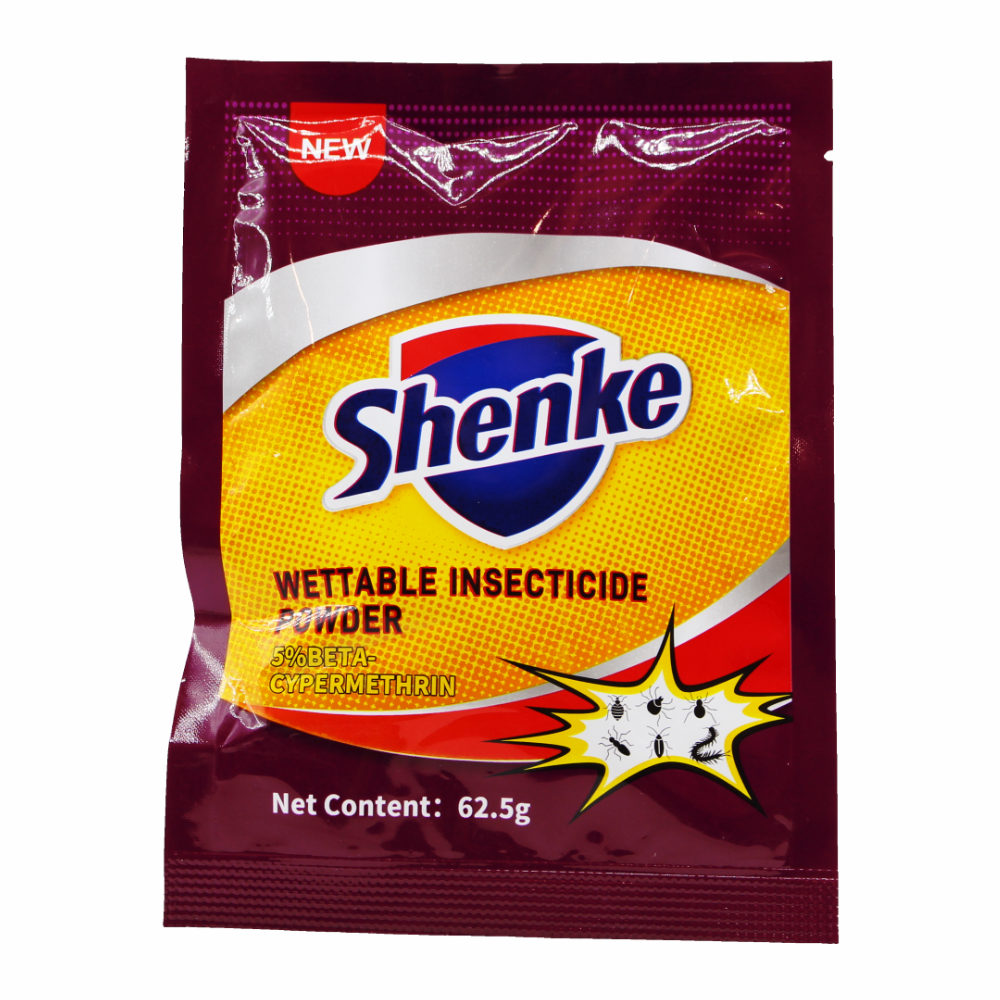
WP stands for Wettable Powder. A WP insecticide is a powder formulation that contains:
an active ingredient (the insect-killing component),
carriers/fillers (help distribute the active ingredient),
and wetting/dispersing agents (help the powder mix with water and stay suspended).
When you add WP to water, it does not dissolve like sugar or salt. Instead, it forms a suspension—tiny particles floating in the spray tank. That’s why mixing technique and agitation are essential.
A WP insecticide is a wettable powder that disperses in water to form a sprayable suspension for pest control.
WP has been used globally for decades because it offers a practical balance between performance, stability, and cost.
Good storage stability: powders are often stable when kept dry and sealed.
Lower solvent content: compared with some liquid concentrates, WP typically reduces solvent-related odor and handling concerns.
Often economical: strong value per kg and per treated area depending on active ingredient.
Flexible use: can be applied with many common sprayer types when mixing is correct.
Dust during handling: manage with careful pouring, PPE, and low-wind handling.
Needs agitation: keep the tank moving so particles don’t settle.
Can clog equipment if poorly mixed or used with incorrect filters/nozzles.
The best way to think about WP is: great formulation—if your mixing and spraying habits are disciplined.
Different formulations exist because different field conditions exist. Here’s a simple comparison to help you choose correctly.
Formulation | Full Name | What It Looks Like | Mixing Behavior | Common Practical Notes |
WP | Wettable Powder | dry powder | forms a suspension | needs pre-slurry + agitation |
WG/WDG | Water-Dispersible Granule | granules | disperses into suspension | less dust than WP, still needs agitation |
SC | Suspension Concentrate | liquid | already suspended | easier handling; still needs agitation |
EC | Emulsifiable Concentrate | liquid | forms an emulsion | may have solvent odor; can be plant-sensitive in heat |
SL | Soluble Liquid | liquid | dissolves | simplest mixing; limited to soluble actives |
If your team struggles with dust control and mixing discipline, WG/WDG or SC can be easier. If you want strong cost-performance and solid stability, WP remains a workhorse.
Because WP forms a suspension, the “right way” to use it is less about complicated chemistry and more about sequence, agitation, and consistency.
Important: Always follow your product label and local regulations. The label is the legal instruction set for dose rates, crops, target pests, and safety intervals.
Confirm target pest, crop/site, and timing (early infestations are easier to control).
Check weather: avoid high wind, strong midday heat, or rain risk soon after spraying.
Inspect your sprayer: clean tank, correct nozzle type, working agitation, and no leaks.
WP powders can create airborne dust when poured. Typical PPE includes:
gloves suitable for chemical handling,
eye protection,
mask/respirator as required by label,
long sleeves/coveralls.
Instead of dumping powder straight into a full tank, make a pre-mix slurry:
Put a small amount of clean water in a bucket or mixing container.
Slowly add WP while stirring to create a smooth “cream-like” slurry.
Break any lumps before it reaches the tank.
This step dramatically reduces clumping and nozzle blockage.
Fill the spray tank partway with water.
Start agitation.
Add the slurry through the filter screen (if applicable).
Continue filling the tank to the required volume while maintaining agitation.
WP performance depends heavily on coverage (getting droplets onto the target area):
Use the nozzle and pressure recommended for your application type.
Maintain a steady speed and boom height (for field spraying).
For foliage pests, aim for uniform leaf coverage, including undersides when relevant.
If agitation stops, WP particles settle. Settling causes:
uneven concentration (weak spray early, over-strong late),
clogged lines/nozzles,
inconsistent results.
WP residues can harden if left in the tank:
flush tank, lines, and nozzles,
clean filters/screens,
dispose of rinse water according to local rules and label requirements.
Stage | What to Check | Why It Matters |
Before mixing | clean water source, clean tank, correct filters | reduces clogging + improves suspension |
During mixing | slurry first, add slowly, agitation on | prevents lumps + ensures uniform concentration |
During spraying | keep agitation, stable pressure, correct nozzle | improves coverage + consistent control |
After spraying | rinse tank/lines/nozzles, clean screens | prevents residue buildup + future blockage |
Problem | Likely Cause | Practical Fix |
Nozzle clogging | poor slurry, hard water, dirty filters, settled powder | improve pre-mix, clean filters, maintain agitation |
Uneven control results | inconsistent speed/pressure, settling in tank | stabilize application, keep agitation running |
Leaf residue visible | WP particles remain on surface (normal) | ensure correct rate per label; improve spray uniformity |
Lumps in tank | adding powder directly to water | always pre-slurry and pour slowly |
Many users ask if WP can be mixed with other products (fungicides, foliar feeds, adjuvants). The safe answer is:
Only tank-mix if the label allows it, and
do a small jar test first to check for clumping, separation, or heat generation.
As a general mixing discipline, operators often follow a mixing order like:
water → 2) WP/WG → 3) SC → 4) EC → 5) adjuvants (if allowed)
But again, label directions come first.
WP is stable when kept dry, but it can be ruined by moisture.
Store in a cool, dry, ventilated place.
Keep packages sealed to prevent humidity absorption.
Avoid direct sunlight and temperature extremes.
Keep away from food, feed, and living areas.
Rotate stock (first-in, first-out) and check packaging integrity.
If WP absorbs moisture, it may cake and become difficult to disperse evenly.
So, what is WP insecticide and how do you use it? WP insecticide is a wettable powder formulation designed to be mixed with water into a sprayable suspension. Its real strengths—stability, value, and reliable field performance—show up when you handle it correctly: make a slurry first, maintain agitation, spray for uniform coverage, and clean equipment thoroughly afterward. If you treat WP like a “simple powder,” you risk clumps, clogged nozzles, and uneven control. If you treat it like a professional suspension system, WP can be one of the most dependable tools in your pest management program.
If you’re sourcing WP insecticide for distribution, crop protection programs, or professional use and want a supplier who understands formulation consistency and practical application needs, you can learn more from Huangshan Lishen Commodity Co., Ltd. and contact the team to discuss product options, packaging, and technical support.
WP insecticide means wettable powder insecticide—a dry powder formulation that disperses in water to form a spray suspension for pest control.
Make a pre-slurry in a small container first, then add it to a partially filled tank with agitation running, and keep agitation on during spraying.
WP often has lower solvent content than some liquid formulations, but safety depends on the active ingredient. Always follow the label and wear required PPE.
Sometimes yes, but only if label directions allow it. A small jar test is recommended to check compatibility before full-tank mixing.


