
Procuring pest control consumables at scale requires a strict balance between product efficacy, end-user respiratory safety, and regional regulatory compliance. Traditional formulations face increasing consumer backlash and regulatory scrutiny due to high particulate matter emissions. Purchasing the wrong formulation of coils risks dead stock, compliance fines, transit breakage, or severe customer health complaints. You need reliable solutions that clear pests without choking the room. This guide deconstructs the technical specifications, active chemical ingredients, and structural quality metrics procurement teams must evaluate before committing to bulk orders of low-smoke alternatives. We explore how modern active ingredients perform, why base materials dictate smoke output, and how you can verify compliance across different regional markets.
Active Ingredients Dictate Viability: Modern pyrethroids (e.g., metofluthrin, dimefluthrin) offer superior knockdown rates with lower toxicity profiles compared to legacy insecticides.
"Low-Smoke" is a Quantifiable Metric: Procurement requires verifying particulate matter (PM2.5) and Volatile Organic Compound (VOC) emission claims through manufacturer testing data, not just marketing labels.
Base Material Determines Quality: Shifting from cheap wood-dust bases to charcoal or plant-fiber bases reduces breakage rates during transit and minimizes respiratory irritants.
Scalability and Economics: For dense mosquito populations and large-area coverage, bulk mosquito coils remain significantly more cost-effective and scalable than electronic repellers.
Compliance is Region-Specific: Importing bulk inventory requires strict adherence to local environmental protection and health authority regulations regarding allowable pesticide concentrations, avoiding grey-market liabilities.
Procurement teams must establish a strict baseline requirement before evaluating any supplier. A viable low smoke mosquito coil must achieve a high mosquito knockdown rate without exceeding safe indoor or outdoor particulate emission thresholds. You cannot rely on visual inspections or marketing claims alone to determine safety. Manufacturers achieve true low-smoke combustion by shifting away from traditional carbon-heavy biomass bases. They now utilize refined charcoal or extruded plant-fiber bases. These advanced materials burn cleaner, generate significantly less ash, and maintain a consistent smolder without producing thick, acrid plumes.
You must define acceptable PM2.5 and VOC limits based on your intended market. Stringent indoor air quality standards demand near-zero visible emissions. Outdoor agricultural use allows for slightly more lenient thresholds, provided the smoke does not contain banned toxic compounds. Request third-party laboratory emission reports from suppliers to verify their low-smoke claims before authorizing large purchases. The manufacturing process for these low-smoke variants involves milling the charcoal to a micro-fine powder, mixing it with specific synthetic binders, and extruding it under high pressure. This creates a dense, uniform structure that controls the burn rate and limits the release of unburned carbon particles into the air.
To properly evaluate emission standards, procurement officers should follow a standardized verification process:
Request independent laboratory testing certificates specifically measuring PM2.5 output during a complete burn cycle.
Review the VOC emission profile to ensure no harmful benzenes or formaldehydes are released during combustion.
Conduct an internal burn test in a controlled, unventilated test chamber of a known volume to measure particulate accumulation over an eight-hour period.
Compare the resulting data against local occupational health and safety guidelines for indoor air quality.
Different environments demand specific product profiles. Hospitality and dining sectors require virtually smokeless, low-odor profiles. Customers will quickly complain if thick smoke or acrid smells disrupt their dining experience. In these settings, prioritize premium charcoal-based coils infused with mild, natural scents or completely unscented variants. The goal is invisible protection. The active ingredient must vaporize efficiently without leaving a heavy chemical scent on furniture or clothing.
Retail distribution prioritizes shelf-life, packaging durability, and broad consumer safety compliance. Retailers need products that survive rough handling and extended warehouse storage without degrading. Rigid outer packaging and moisture-proof inner seals become non-negotiable requirements. If the product absorbs moisture during transit, the structural integrity weakens, leading to high breakage rates on the retail shelf. Consumers who open a box to find broken pieces will immediately request refunds and damage the brand's reputation.
Industrial or agricultural outdoor workspaces demand entirely different specifications. These environments require high wind resistance and maximum spatial repellency. Workers need the ability to deploy multiple units economically in dense swarms. In these scenarios, structural thickness and active ingredient release rates take precedence over achieving a completely smokeless burn. The product must withstand high humidity and occasional light drizzle without extinguishing.
| Environment Type | Primary Requirement | Base Material Preference | Smoke Tolerance | Packaging Priority |
|---|---|---|---|---|
| Hospitality & Dining | Invisible protection, low odor | Refined Charcoal | Extremely Low (Near Zero) | Aesthetic, discreet design |
| Retail Distribution | Shelf stability, low breakage | Plant-fiber or Charcoal | Low to Moderate | Rigid, crush-resistant cartons |
| Agricultural / Outdoor | Wind resistance, high release | Treated Wood-dust or Charcoal | Moderate | Bulk volume, moisture-proof |
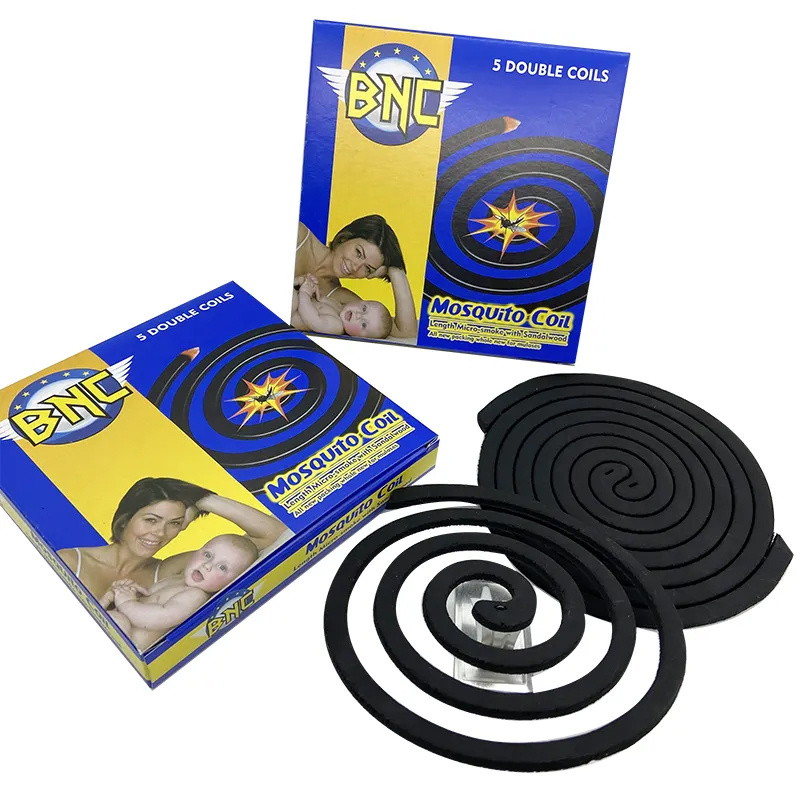
Evaluating a mosquito repellent coil begins with its active chemical profile. Modern standard active ingredients include Metofluthrin, Dimefluthrin, and d-Allethrin. Metofluthrin and Dimefluthrin represent the latest generation of synthetic pyrethroids. They offer superior efficacy and safety profiles compared to older chemicals. These modern compounds vaporize efficiently at lower temperatures, making them ideal for low-smoke base materials. They work by binding to the voltage-gated sodium channels in the insect's nerve cells. This causes prolonged depolarization, leading to rapid paralysis and death. This mechanism is highly specific to insects, meaning the toxicity to mammals remains exceptionally low.
You must analyze concentration percentages carefully to debunk common consumer myths. Higher chemical concentrations do not automatically equate to better performance. A unit containing 0.01% metofluthrin often outperforms a 0.3% d-Allethrin variant. This performance gap occurs due to superior vaporization rates and higher intrinsic toxicity to insects. Modern synthetic pyrethroids disrupt mosquito nervous systems rapidly at much lower ambient concentrations than older chemicals. This efficiency allows manufacturers to use less active ingredient, reducing human exposure risks while maintaining high knockdown rates. Procurement teams must look at the specific chemical compound rather than just the total percentage of active ingredients listed on the box.
Cheap manufacturing historically relied on highly restricted or banned chemicals. Substances like octachlorodipropyl ether (S-2) and DDT derivatives provided cheap efficacy but posed severe human health risks. You must actively screen suppliers to ensure these compounds never enter your supply chain. Exposure to these legacy chemicals can cause severe respiratory distress, neurological damage, and long-term environmental contamination. Modern procurement requires a zero-tolerance policy for unverified chemical additives.
Grey-market imports carry massive financial and legal risks. Formulations legally manufactured and widely used in certain high-demand Asian markets often contain chemical concentrations strictly prohibited in Western markets. Australia, the United States, and the European Union enforce rigid pesticide limits. Importing non-compliant inventory leads to immediate customs seizures, heavy fines, and potential criminal liability for the importing entity. You cannot assume that a product legally sold in one country meets the regulatory standards of another.
Protect your procurement process by verifying Material Safety Data Sheets (MSDS) and Certificates of Analysis (CoA) from overseas manufacturers. Cross-reference all manufacturer claims with local regulatory bodies. Consult the EPA in the US, the APVMA in Australia, or ECHA in Europe. Do not accept generic safety certificates; demand batch-specific testing data from accredited independent laboratories. Ensure the laboratory holds ISO/IEC 17025 accreditation for testing and calibration.
Binder quality and structural thickness directly impact the consistency of a long burning mosquito coil. Manufacturers use various starches, guar gums, and synthetic binders to hold the combustible material together. High-quality binders ensure a steady, uninterrupted smolder. If the binder ratio is too low, the product will burn too quickly or crumble. If the ratio is too high, it will struggle to stay lit. When evaluating standard 8-hour versus extended 12-hour variants, measure the diameter and material density. Thicker profiles burn longer but require better airflow to prevent extinguishing.
You must correlate density with transit survivability. Brittle, low-density structures lead to high breakage rates. Broken units translate directly to unsellable inventory and lost revenue in bulk shipments. Examine the stamping and separation process during your sample evaluation. These products usually ship as intertwined pairs to save space. They must separate easily without snapping. Clean separation serves as a key indicator of manufacturing precision and proper moisture control during the drying phase. If the moisture content exceeds 12% during packaging, the product becomes pliable and prone to mold. If it drops below 8%, it becomes excessively brittle.
Procurement professionals must understand the context behind the famous "100 cigarettes" emission study. That study highlighted the hazardous smoke produced by cheap, traditional wood-dust bases burned in unventilated rooms. You must differentiate those legacy products from the controlled, significantly reduced emissions of modern low-smoke formulations. Advanced charcoal bases produce a fraction of the particulate matter generated by raw sawdust. The carbonization process removes the volatile organic compounds from the raw wood before it is ever shaped into the final product.
Establish rigorous internal testing protocols for visible smoke and ash cohesion. Light sample units in a controlled environment against a dark background to measure visible smoke output. Evaluate the ash structure as it burns. High-quality manufacturing produces cohesive ash that remains attached until gently tapped. Poor-quality manufacturing drops hot embers continuously, creating severe fire hazards on consumer floors or outdoor decks. The ash should be light gray or white, indicating complete combustion. Black ash indicates incomplete combustion and higher particulate emissions.
Indoor and outdoor environments require distinct product formulations. An outdoor mosquito coil requires a thicker profile and higher active ingredient release rates. These features combat wind dispersion and maintain a protective perimeter in open air. Outdoor variants must also demonstrate resistance to high ambient humidity, which can otherwise dampen the combustion edge. Manufacturers often add specific combustion accelerators to outdoor variants to ensure they stay lit even in challenging weather conditions.
Indoor requirements focus entirely on respiratory safety. Indoor variants face strict limitations on spatial volume saturation. They require mandatory low-smoke profiles to prevent PM2.5 accumulation. Consumer packaging for indoor variants must include clear ventilation guidelines, instructing users to keep windows partially open during use. The active ingredient concentration is typically lower for indoor use, relying on the enclosed space to maintain an effective concentration in the air.
| Specification Metric | Indoor Requirements | Outdoor Requirements |
|---|---|---|
| Base Material | Refined charcoal or pure plant fiber | Standard charcoal or treated wood-dust |
| Smoke Output | Virtually smokeless (Low PM2.5) | Moderate smoke acceptable |
| Active Ingredient Release | Low, steady vaporization | High, rapid release for wind resistance |
| Structural Thickness | Standard (approx. 2-3mm) | Thickened (approx. 4-5mm) |
| Burn Time Focus | Consistent 8-hour overnight protection | Extended 10 to 12-hour coverage |
Procurement teams often face pressure to select the lowest cost per unit. However, you must analyze the hidden costs of procuring cheap sawdust-based inventory. These low-tier products suffer from high transit breakage due to brittle structures. They deliver a poor user experience characterized by strong acrid odors and excessive smoke. Ultimately, they introduce potential health liabilities and regulatory fines. The initial savings on the purchase order quickly evaporate when you factor in customer returns, damaged goods, and potential legal action from non-compliant chemical profiles.
Evaluate the return on investment for premium charcoal or fiber bases. The higher upfront unit cost is quickly offset by lower return rates and reduced transit damage. Premium bases elevate brand perception and ensure compliance safety. When evaluating scalability, bulk mosquito coils remain the most economically viable solution for large-scale pest control. They require zero infrastructure, unlike electronic repellers that demand high capital expenditure, constant power sources, and regular maintenance. A single pallet can protect thousands of square feet for months, making it the preferred choice for disaster relief, agricultural camps, and large outdoor events.
Manufacturers frequently add fragrances like citronella, sandalwood, or lavender to mask the natural burning odor. You must assess how these added fragrances impact combustion efficiency. Heavy fragrance oils can alter the burn rate and increase visible smoke output. The oil changes the density of the extruded material, sometimes causing it to burn hotter and faster than intended. This reduces the overall burn time and can lead to uneven vaporization of the active pyrethroid.
Weigh the consumer appeal of scented variants against the increased risk of allergic reactions. Burning fragrance oils introduces additional Volatile Organic Compounds (VOCs) into the air. For indoor use, unscented low-smoke variants generally provide the safest respiratory profile. Reserve heavily scented variants for outdoor applications where VOC accumulation poses no risk. If you must procure scented variants for indoor retail, demand testing data showing that the specific fragrance oils used do not produce harmful byproducts when subjected to combustion temperatures.
Every Mosquito Coil shipment faces degradation risks during long-term storage. Temperature fluctuations and high humidity degrade active pyrethroids over time. Moisture absorption weakens the structural integrity, making it difficult to light and prone to extinguishing mid-burn. Warehouses must maintain strict climate control, keeping humidity below 60% and temperatures stable. Pallets should never be stored directly on concrete floors where moisture can seep upward.
You must outline strict packaging requirements in your supplier contracts. Mandate moisture-proof inner wrapping, utilizing high-quality shrink wrap or sealed foil pouches. Specify rigid, crush-resistant outer master cartons. Flimsy cardboard cartons will collapse under the weight of stacked pallets, crushing the inventory inside before it ever reaches a retail shelf. Implement a strict First-In, First-Out (FIFO) inventory management system to ensure older stock rotates out before the active ingredients begin to lose their efficacy.
Never finalize a bulk contract without establishing a rigorous sample-testing protocol. Request unbranded samples from the actual production line, not specially crafted prototype batches. Test these samples for ignition ease. A quality unit should light within ten seconds of flame exposure. Monitor it for a continuous burn without extinguishing. Inspect the ash structure for cohesion and safety. Conduct drop tests by dropping a fully packed master carton from a height of one meter onto a concrete floor, then open it to calculate the exact percentage of broken units.
Audit manufacturer credentials thoroughly. Require verified proof of ISO 9001 certification for quality management. Demand evidence of Good Manufacturing Practices (GMP) compliance. Most importantly, verify their valid local pesticide manufacturing licenses. A supplier operating without proper local licensing presents a massive supply chain risk, as authorities can shut down their facilities without warning. Review their raw material sourcing logs to ensure they purchase active ingredients from reputable chemical suppliers rather than mixing unverified compounds in-house.
Request comprehensive MSDS and CoA documentation for all active ingredients before initiating any purchase orders.
Order unbranded small-batch samples to conduct internal burn, smoke, and drop tests to verify structural integrity.
Consult local import authorities regarding specific chemical concentration limits to ensure full regulatory compliance.
Specify rigid master carton requirements and moisture-proof inner seals in your contracts to prevent transit damage.
Establish a strict FIFO inventory system in your warehouses to prevent pyrethroid degradation over time.
A: Low-smoke variants replace traditional wood-dust or sawdust bases with refined charcoal or extruded plant fibers. These advanced materials burn much cleaner, producing significantly less particulate matter (PM2.5) and visible smoke while still effectively vaporizing the active insecticidal ingredients.
A: Modern synthetic pyrethroids like Metofluthrin and Dimefluthrin are highly effective and feature lower toxicity profiles for humans compared to legacy chemicals. They disrupt mosquito nervous systems rapidly at very low ambient concentrations.
A: No. Efficacy depends on the specific chemical compound and its vaporization rate. A modern pyrethroid like metofluthrin at 0.01% concentration can easily outperform older chemicals like d-Allethrin at 0.3% because it is intrinsically more toxic to insects and vaporizes more efficiently.
A: Standard high-quality units are engineered to burn for approximately 8 hours, providing overnight protection. Extended variants, which are thicker and denser, can burn for 10 to 12 hours to accommodate longer outdoor events or agricultural shifts.
A: Yes. Active pyrethroids degrade over time, especially when exposed to high heat and humidity. Most high-quality units have a shelf life of 2 to 3 years if stored properly in moisture-proof packaging within climate-controlled warehouses.
A: Teams should conduct physical drop tests to check structural brittleness. They must also perform burn tests to evaluate ignition ease, continuous smoldering without extinguishing, visible smoke output, and ash cohesion to ensure fire safety.


