
Why do some pest control dusts work almost instantly to eradicate an infestation, while others fail miserably? You are left frustrated and still dealing with crawling intruders. The secret rarely lies in a newly discovered, highly toxic chemical compound. As formulation engineers know, the true differentiator is the manufacturing process. Specifically, the mechanical engineering behind the grinding and milling of the product plays a massive, often overlooked role in its field performance.
Particle size dictates everything. It controls how well a formulation adheres to a pest's body. It determines how safely a technician can apply it. In this comprehensive guide, we will explore the fascinating science of milling. We will discuss the delicate balance between a powder that is too coarse and one that is too fine. Finally, we will provide actionable insights to help you choose the most effective product for your specific eradication needs.
Particle Size is Crucial: Finer grinding exponentially increases the total surface area of the formulation. This physical alteration leads to faster active ingredient transfer and significantly more effective pest knockdown.
Adhesion Matters: A meticulously ground powder utilizes static electricity to cling to the microscopic sensory hairs and waxy exoskeletons of target insects. This ensures they carry the lethal dose back to their nesting sites.
Balance is Required: Manufacturing is a delicate tightrope walk. Over-grinding creates a product that is excessively fine. This leads to severe airborne drift, potential inhalation risks, and premature chemical degradation.
Application Dictates Efficacy: Even the most perfectly milled product requires precise application techniques. Using specialized equipment ensures the formulation reaches deep into hidden cracks without clumping into useless piles.
To truly appreciate how the manufacturing process impacts pest control efficacy, we must first establish a foundational understanding of what makes up a powdered pest management product. Insecticides are not simply raw, unrefined chemicals scooped into a bottle. They are highly complex formulations engineered for specific environmental behaviors and biological interactions.
In the professional pest management industry, a Dustable Powder—frequently referred to simply as a dust—is a dry, ready-to-use formulation. Unlike wettable powders or emulsifiable concentrates that demand precise dilution, dustable formulations do not require mixing with water or any other liquid solvent before application. They are applied completely dry. Technicians apply them directly from convenient packaging, like standard 50g precision bottles, or expel them through a specialized applicator tool.
A standard formulation typically consists of two primary components. The first is the active ingredient, which is the actual chemical or physical compound responsible for neutralizing the pest. The second component is the inert carrier. Because active ingredients are often highly concentrated and potent, they must be heavily diluted to ensure safe handling and even distribution across a treated area. Manufacturers use inert, finely ground materials such as talc, clay, silica, or volcanic ash as this carrier vehicle. The grinding process ensures that the active ingredient is homogeneously blended and permanently bonded with these microscopic carrier particles.
Powder formulations generally fall into two distinct categories based on their primary mode of action: chemical and mechanical. Chemical insecticides operate by actively interfering with the insect's internal biological systems. Synthetic chemicals target the insect's central nervous system, causing rapid paralysis and eventual death. These synthetic compounds are carefully coated onto the inert carrier dust during the intensive milling process.
In contrast, mechanical or physical insecticides do not rely on systemic chemical toxicity. Instead, they physically destroy the insect. Fossilized diatoms, for instance, boast microscopic, razor-sharp edges. These edges systematically abrade the protective waxy cuticle of the insect's exoskeleton, leading to severe dehydration. Both chemical and mechanical formulations rely heavily on their physical form to function effectively in real-world, high-stress environments.
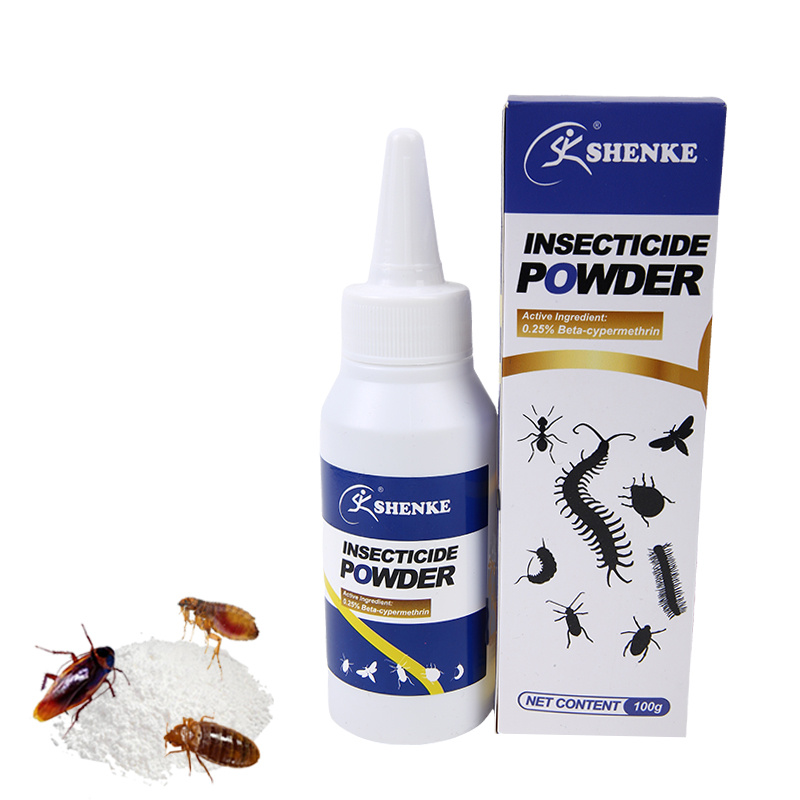
The efficacy of a powdered formulation is heavily dictated by the physics of its individual particles. Grinding, or milling, is not merely about making a product look uniform inside a commercial bottle. It is a precise engineering process that fundamentally alters the physical and chemical behavior of the compound.
The most significant physical transformation that occurs during the grinding process is the exponential increase in surface area. To visualize this concept, consider the analogy of a solid sugar cube versus a packet of granulated sugar. A solid sugar cube has a relatively small total surface area exposed to the outside environment. If you drop it into a glass of iced tea, it dissolves agonizingly slowly. However, if you crush that exact same sugar cube into fine granules, the total surface area exposed to the liquid increases dramatically. It dissolves almost instantly.
This exact same principle applies directly to pest control formulations. When a compound is ground into finer microscopic particles, its total surface area expands significantly. In practical field terms, more surface area means that a dramatically higher percentage of the active ingredient is exposed. It is readily available to make contact with the insect. When a pest unknowingly walks through a finely milled treatment zone, the high surface-area-to-volume ratio ensures a rapid, lethal transfer of the dose from the floorboard to the insect's body.
Modern manufacturers utilize highly specialized, industrial-scale milling equipment. Air-jet mills, hammer mills, and mechanical classifier mills help achieve the exact desired particle size. The specific duration and aggressive intensity of the grinding process determine the particle size distribution of the final batch.
A high-quality manufacturing process aims for a very narrow particle size distribution. This means the vast majority of the particles fall within a highly specific, optimal size range measured in microns. If the milling time is cut too short, the resulting powder will contain coarse, heavy granules. Insects can easily detect and detour around these obstacles. Conversely, a highly controlled and scientifically monitored milling technique guarantees uniformity. Every single puff expelled from a duster delivers consistent, reliable eradication power.
When the grinding process is perfectly optimized, the resulting formulation exhibits several unique physical properties. These properties directly enhance its ability to wipe out stubborn pest populations. The mechanics of how the product interacts with the insect's biology rely heavily on achieving that perfect micron size.
Insects possess a naturally occurring static electrical charge on their bodies. The constant friction of their rapid movement across various household surfaces generates this charge. Furthermore, their exoskeletons are completely covered in microscopic sensory hairs called setae.
A properly ground formulation intelligently leverages these biological traits. Microscopic particles inherently possess their own slight static charge. When an insect scurries nearby, the triboelectric effect causes the fine dust particles to literally jump through the air. They cling tightly to the insect's antennae, legs, and abdomen. This specific mechanism is absolutely vital for a high-quality Cockroach Powder. Cockroaches are meticulous groomers. When their appendages become coated in a fine, irritating dust, they immediately ingest the active ingredient while attempting to clean themselves. This creates a highly effective secondary mode of ingestion.
The sheer size of the particle dictates exactly how quickly the active ingredient can bypass the insect's natural biological defenses. Insects do not breathe through lungs like mammals. Instead, they respire through tiny, protected pores along the sides of their bodies called spiracles. Coarse, clunky grains are far too large to ever enter these breathing pores. Finely ground particles, however, are small enough to be drawn directly into the spiracles. This introduces the active ingredient straight into the insect's vulnerable respiratory system for an incredibly rapid knockdown.
Additionally, smaller and sharper particles are significantly more efficient at absorbing the protective lipid layer on the outside of the insect's cuticle. The faster this critical wax layer is compromised by the Powder Insecticide, the faster the insect succumbs to lethal, irreversible dehydration.
Pests rarely live out in the open where they are easy to spot. They harbor deep in microscopic wall voids, behind kitchen baseboards, and within structural cracks. A critical advantage of finely ground powders is their unique aerodynamic behavior. When puffed from a professional applicator, an optimally milled dust behaves almost exactly like a fluid. It suspends in the air just long enough to float deep into inaccessible voids before finally settling. This fluidization ensures that the product coats the internal, hidden surfaces of a pest's nesting area, leaving them with absolutely no safe path of travel.
Current formulation science trends show a massive shift toward precision milling. Regulatory pressures and a growing demand for eco-friendly solutions drive this intense need for manufacturing accuracy. Historically, the industry relied on a one-size-fits-all grinding approach, churning out standard dusts without much variation.
Today, the pest management manufacturing sector is increasingly adopting advanced air-jet classifiers. These machines can isolate particle size distributions to an exact, predetermined micron range. This smart milling trend is fueled by the need to maximize the bioavailability of the active ingredient. By exposing more surface area, manufacturers can effectively reduce the total chemical load introduced into the environment without sacrificing knockdown power. Experts predict the next generation of milling will focus heavily on specialized, multi-modal powders. These advanced formulations will combine varying particle sizes within a single batch. The finest particles will deliver rapid knockdown, while slightly larger particles will provide long-lasting residual control in challenging, high-humidity environments.
Extremely fine particles are strictly necessary for adhesion and penetration. However, there is a definitive biological and physical limit. Grinding a product into an ultra-fine, microscopic dust can completely ruin its efficacy. It also introduces severe, unintended application hazards.
Relentlessly reducing a product to an ultrafine dust destroys its physical mass. If particles drop below 5 microns, they can no longer settle gravitationally. Instead of coating the intended target surface, the powder will simply drift away on the slightest ambient air currents or HVAC drafts. This environmental loss means the product never actually reaches the intended target site. It drastically reduces killing power while simultaneously contaminating non-target areas of a home or commercial facility.
Finer grinding drastically increases surface area. Yet, excessive surface area exposes the sensitive chemical active ingredients to much higher levels of ambient oxygen, ultraviolet light, and atmospheric moisture. This over-exposure catalyzes rapid oxidation and chemical breakdown. Consequently, a product milled far too finely may lose its chemical potency weeks or even months earlier than a correctly milled counterpart.
One of the most frustrating issues for pest control operators is hygroscopicity. This is the natural tendency of a substance to absorb moisture directly from the air. Ultra-fine powders act like microscopic sponges for ambient humidity. When an overly fine formulation absorbs moisture, it quickly forms hard, unusable clumps. This clumped material immediately clogs precision dusters. An even, whisper-thin application becomes entirely impossible. Instead of a fine coating, the applicator spits out heavy chunks of paste that pests easily walk around.
When addressing a severe, entrenched pest infestation, selecting the correct formulation is just as critical as properly identifying the pest itself. Consumers and professionals alike must understand exactly how to evaluate these products. You must ensure you are applying a solution that will effectively adhere to the target insects.
To accurately determine the quality of a powdered product, look closely beyond the active ingredient percentage boldly printed on the label. The visual and tactile consistency of the grind is a primary indicator of field performance. A high-quality Insecticide Powder should flow smoothly inside its container when gently shaken. It should almost mimic the fluid dynamics of water. It should absolutely not look like heavy, wet sand. Nor should it billow into a massive, uncontrollable cloud the moment the cap is opened. A simple visual inspection reveals if a product has been poorly milled or if it has absorbed too much moisture due to a flawed particle size distribution.
To make the selection process concrete, engineers look at specific size brackets. Here is how different grinds translate to actual field performance:
| Particle Size Range | Adhesion to Insects | Airborne Drift Risk | Best Application Scenario |
|---|---|---|---|
| Coarse (>50 microns) | Poor. Easily falls off the exoskeleton. | Very Low. Drops straight down. | Outdoor perimeter barriers where wind is high. |
| Optimal (10-50 microns) | Excellent. Clings via static electricity. | Moderate. Settles reliably after application. | Deep wall voids, cracks, and indoor crevices. |
| Ultrafine (<10 microns) | Good, but highly prone to clumping. | High. Floats away on minor air currents. | Not recommended for standard structural pest control. |
Even the most scientifically advanced, perfectly ground powder will fail miserably if applied incorrectly by the end user. The science of grinding maximizes the potential of the product. The physical application technique determines its actual field efficacy.
Many operators assume applying a larger volume yields better, faster results. They are wrong. Empirical evidence demonstrates that insects actively avoid large, visible piles of foreign material. They treat them as physical barricades rather than walking through them. The actual goal is to apply a whisper-thin, almost invisible layer that the insect will unknowingly traverse.
This requires the mandatory use of professional application tools, such as handheld bulb dusters or bellows. Imagine trying to dump a heavy pile of dust into a narrow wall void. It simply falls flat and clumps. Conversely, using a proper duster mixes the powder with air, allowing it to disperse evenly. A brilliant engineering best practice is to place a small metal coin or ball bearing inside the bulb duster. Shaking the duster allows the coin to violently break up any minor clumps. This ensures the formulation is expelled as a fine, fluid mist that settles perfectly over the target surface.
Because these highly effective formulations are specifically milled to be incredibly fine and light, they inherently pose a significant inhalation risk during the active application process. These products are highly stable and safe once fully settled into cracks and crevices. However, the physical act of puffing them into voids temporarily suspends microscopic particles in the breathing zone.
It is a mandatory safety practice to wear appropriate personal protective equipment. This includes a well-fitted, NIOSH-approved particulate respirator mask and nitrile gloves. Standard cloth masks are entirely insufficient for blocking particles milled to these microscopic sizes. Furthermore, always ensure HVAC systems, ceiling fans, and drafts are temporarily turned off in the treatment zone. This prevents fine particles from being accidentally distributed into non-target living areas or food preparation zones.
Ultimately, the grinding process serves as the vital scientific backbone of modern pest control. The meticulous engineering of particle size ensures optimal adhesion, comprehensive environmental coverage, and rapid lethality. By understanding that a whisper-thin, properly aerated dusting always outperforms a thick, clumpy pile, you can drastically improve your pest management outcomes.
Well-milled products consistently deliver significantly better overall efficacy. They save time, money, and frustration. When you are ready to protect your home or business from resilient infestations, prioritize precision-milled control solutions. For professional-grade, highly reliable Insect Killer Powder, explore the optimized formulations at Lisn Pest Killer to guarantee a faster return to a pest-free environment.
Generally, yes. The intensive grinding process drastically increases the total surface area of the formulation. A larger surface area allows significantly more of the active ingredient to come into direct physical contact with the insect's exoskeleton. This enhanced contact accelerates the degradation of the pest's waxy cuticle or speeds up the rapid absorption of the chemical agent. This leads to a much faster knockdown rate. However, there is a physical limit. If the powder is milled too finely, it becomes highly susceptible to airborne drift and may simply blow away before the insect ever interacts with it.
Empirical studies in formulation science suggest that the optimal particle size for targeting crawling insects typically ranges between 10 and 50 microns. Particles in this specific size range are microscopic enough to easily exploit static electricity. This allows them to cling effectively to the tiny sensory hairs on a cockroach's legs and antennae. At the exact same time, particles of this size carry just enough physical mass to settle rapidly out of the air. This ensures the product remains heavily concentrated in the targeted cracks and crevices where cockroaches actively hide and breed.
Yes, these formulations are entirely safe for indoor use, provided they are applied strictly according to the manufacturer's specific label instructions. The absolute key to indoor safety is precise, targeted application. The powder must be injected directly into deep cracks, enclosed wall voids, and hidden crevices where humans, domestic pets, and children cannot access it. It should never be applied in open, exposed areas, on kitchen countertops, or inside ventilation ducts where ambient airflow could disturb the settled particles.
One of the primary, unmatched advantages of a dry formulation is its exceptional residual longevity. Liquid insecticidal sprays evaporate, dry up, and chemically degrade under ultraviolet light within a few short weeks. A properly milled powder can remain highly effective for several months, or even years. The longevity of the product depends entirely on environmental conditions. As long as the treated area remains completely dry and undisturbed by heavy airflow or vacuuming, the microscopic particles will retain their lethal efficacy.
Clumping is almost always the direct result of unwanted moisture absorption. Finely ground particles possess a massive surface area relative to their volume. This makes them highly hygroscopic, meaning they are prone to absorbing water directly from the surrounding air. When exposed to high indoor humidity, these microscopic particles bind together. They form dense, heavy clumps that cannot flow through application dusters or successfully adhere to insects. To prevent this frustrating issue, products must be stored tightly in airtight containers within climate-controlled environments.
Absolutely. High ambient humidity directly impacts the electrostatic properties of the powder. When the air is saturated with moisture, the static charge that helps particles cling to an insect's exoskeleton dissipates much faster. Additionally, as the powder absorbs moisture, it becomes heavier and less likely to fluidize properly when puffed from a duster. For optimal performance, always store and apply these formulations in dry conditions.
Formulation engineers and quality control professionals use advanced laboratory equipment like laser diffraction particle size analyzers. These machines pass a laser beam through a dispersed cloud of the powder. They measure the angle and intensity of the scattered light to calculate the exact size of the particles down to the nanometer. This ensures the batch meets the strict 10 to 50-micron standard required for maximum field efficacy.


