
Achieving effective mosquito control requires balancing active ingredient concentration against liquid depletion and indoor air quality. Buyers frequently misjudge device efficacy when upgrading from combustible coils, blaming the liquid formulation for poor performance. In reality, the root cause is usually mismatched or poorly regulated heater power. Evaluating thermal dynamics, wick materials, and wattage specifications is necessary before investing in a standardized electric mosquito repellent liquid set for residential or commercial use. A poorly calibrated heater wastes fluid and leaves spaces unprotected. A precisely engineered unit maximizes spatial coverage while minimizing energy consumption. We will examine how heater power dictates liquid release rates and how to select optimal hardware for specific environmental requirements.
Power-to-Release Ratio: Heater wattage directly dictates the evaporation rate; standard devices operate around 5W, balancing steady capillary action with sustained vapor release.
Health and IAQ Superiority: Unlike traditional mosquito coils that produce high airborne particulate matter, electric vaporizers engineer a controlled vapor release, significantly diminishing respiratory health hazards.
Thermal Regulation is Critical: Unregulated high power leads to rapid liquid depletion and potential thermal degradation of active ingredients, while underpowered units fail to achieve the necessary spatial coverage.
Component Synergy: The vaporization rate is not solely dependent on the heater; the proximity of the porous wick to the heating element and the viscosity of the liquid are equally critical.
Hardware Evaluation: Selecting a reliable device requires assessing voltage adaptability, thermal safety standards, and compatibility with standardized refill cartridges.
A successful vaporization process relies on consistent, controlled release. The objective is to disperse active ingredients like prallethrin or transfluthrin evenly throughout a room without altering their chemical structure. Traditional mosquito coils rely on uncontrolled burn rates, generating combustion byproducts and excessive particulate matter. Modern liquid vaporizers eliminate these hazards through precise thermal engineering. They rely on a delicate physical balance between capillary action, fluid viscosity, and applied heat to maintain a steady protective barrier.
The core of the delivery system is the porous wick. This component draws liquid upward from the reservoir against gravity. Capillary action drives this continuous fluid movement, relying on the surface tension of the solvent and the microscopic pores within the wick material. The physical structure of the wick determines the exact flow rate. Manufacturers use various materials to achieve specific capillary speeds, matching them to the viscosity of the liquid formulation.
The capillary process follows a strict mechanical sequence:
Solvent absorption occurs at the base of the wick submerged in the reservoir.
Vertical fluid transport pushes the liquid upward via microscopic pores.
Thermal excitation takes place at the heating ring interface at the top of the device.
Vapor dispersion releases the active ingredients into the ambient air currents.
Wick density interacts directly with ambient and applied heat. A denser wick slows the fluid transfer, which is ideal for highly volatile solvents. A highly porous wick accelerates fluid transfer, necessary for thicker formulations. The heating element must perfectly match this physical flow rate to maintain a steady vapor release. If the wick delivers fluid faster than the heater vaporizes it, the device will leak solvent onto the casing. If the heater outpaces the wick, the dry tip will overheat, bake the remaining residue, and permanently clog the pores.
Wick Material Performance Characteristics
| Material Type | Capillary Speed | Heat Resistance | Degradation Rate | Ideal Application |
|---|---|---|---|---|
| Alumina Ceramic | Moderate | Extremely High | Very Slow | Standard 5W continuous use devices |
| Carbon Fiber | Fast | High | Moderate | High-viscosity solvent formulations |
| Synthetic Polymer | Variable | Low to Moderate | Fast | Short-term or disposable units |
| Wood Powder Blend | Slow | Moderate | Moderate | Low-wattage, extended-release units |
Modern devices utilize Positive Temperature Coefficient (PTC) thermistors. These specialized heating elements self-regulate their temperature through fundamental material physics. Made from doped polycrystalline ceramics like barium titanate, PTC heaters possess a unique electrical property. As the heater warms up, its electrical resistance increases sharply at a specific threshold. This physical property prevents the element from exceeding a designated temperature. It maintains a stable operating temperature despite minor voltage fluctuations in the power grid. This stability is essential for consistent vapor release, ensuring the device never reaches temperatures that could ignite the solvent or melt the plastic casing.
Physical positioning also dictates performance. The wick-holding area sits at the bottom of the device, securing the liquid bottle. The heating ring sits at the top, wrapping around the exposed wick tip with a precise millimeter gap. This creates a highly localized evaporation zone. The heat transfers into the wick via radiation and convection, turning the liquid solvent into vapor without boiling the entire reservoir below.
Many devices feature mechanical knob switches to control output. These switches do not alter the electrical power draw or change the PTC temperature. Instead, they physically expose a larger or smaller portion of the wick to the heating element. Raising the wick increases the surface area exposed to the heat zone, increasing the vaporizing rate for larger rooms. Lowering the wick reduces heat exposure, conserving the liquid for smaller spaces while maintaining the exact same electrical consumption.
Wattage serves as the primary engine of liquid release. It dictates how fast the solvent evaporates and carries the active ingredients into the air. Understanding the vaporization curve helps you optimize usage, minimize waste, and ensure the active ingredients remain chemically intact during dispersion.
Most standard units consume approximately 5W of power. This baseline is highly optimized for controlled vapor release. Operating at 5W yields roughly 40 Wh of energy consumption over an standard 8-hour daily cycle. This low power draw provides a steady, reliable evaporation rate suitable for standard bedrooms, typically releasing about 0.10ml to 0.15ml of liquid per hour.
Increasing the wattage changes the fluid dynamics drastically. A higher wattage heater causes an exponential increase in the liquid release rate. The room saturates with repellent much faster, which is useful for rapid knockdown of insect populations in open spaces. However, this drastically reduces the cartridge lifespan. A 45ml bottle engineered for 30 nights might deplete in just 12 to 15 nights under high heat. Decreasing the wattage extends cartridge life significantly but often results in sub-lethal ambient concentrations. Mosquitoes will remain active if the vapor concentration falls below the effective neurological threshold.
Thermal Dynamics and Vaporization Outcomes
| Applied Wattage | Peak Ring Temperature | Evaporation Rate (ml/hr) | Pyrethroid Integrity | Spatial Coverage |
|---|---|---|---|---|
| 3W | 75°C - 85°C | 0.05 - 0.08 | 100% Intact | Poor (Small closets only) |
| 5W | 95°C - 110°C | 0.10 - 0.15 | 98% Intact | Optimal (Standard bedrooms) |
| 7W | 115°C - 125°C | 0.20 - 0.25 | 85% Intact | High (Large living rooms) |
| 9W+ | 135°C+ | 0.35+ | Severely Degraded | Ineffective (Chemical breakdown) |
Excessive heat does not equal better protection. Common pyrethroids used in these liquids have a specific thermal degradation threshold. If the heating element gets too hot, it breaks the molecular bonds of the chemical compound before it can disperse into the room. You waste the active ingredient, deplete the solvent rapidly, and gain absolutely no pest control benefits.
The sweet spot involves heating the solvent just enough to achieve a phase change. The active ingredients must ride the solvent vapor into the air completely intact. PTC heaters are calibrated to stay within this narrow temperature window, usually between 95°C and 110°C. They ensure the chemicals vaporize efficiently without breaking down molecularly, maintaining their efficacy against mosquito nervous systems.
Global power grids vary significantly, presenting a major challenge for thermal regulation. A standard device engineered for a 110V environment will draw excessive current on a 240V grid, leading to immediate overheating, rapid solvent boiling, and potential fire hazards. A universal voltage mosquito heater solves this problem through advanced internal circuitry.
These units manage power draw across different global grids automatically. They utilize internal switch-mode power supplies or highly specialized wide-band PTC ceramics to regulate the incoming voltage. This prevents temporary overheating of the wick and eliminates erratic liquid release rates. The device maintains a consistent internal temperature, ensuring predictable cartridge depletion and safe operation regardless of the wall outlet's voltage output.
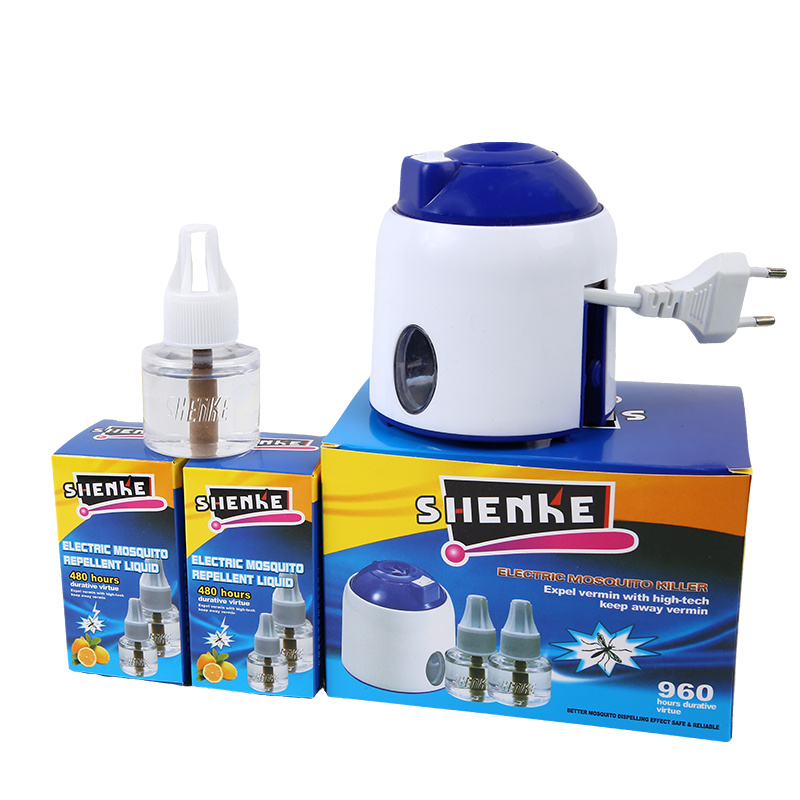
Selecting the right hardware requires analyzing several operational dimensions beyond basic aesthetics. You must balance vaporization efficacy against depletion rates, energy consumption, material safety, and component compatibility to ensure long-term reliability.
Buyers should calculate the depletion rate per hour of use based on stated wattage and liquid volume. Standard 45ml bottles typically last between 30 and 60 nights, depending entirely on the heater's thermal calibration. A standard 5W heater usually achieves the 45-night mark under standard 8-hour usage cycles. Understanding this math prevents unexpected shortages during peak mosquito seasons.
You can leverage adjustable knob switches to optimize these depletion rates for varying environments. You do not need to purchase a higher-wattage unit for a larger room. You simply adjust the mechanical switch to expose more wick to the heating ring. This increases the release rate for larger spaces. You can then lower the wick for smaller spaces, conserving the liquid and maximizing the operational lifespan of the cartridge.
Long-term energy footprints matter significantly when deploying multiple units across a large residential facility or commercial space. A standard electric mosquito vaporizer set consumes about 40 Wh per day. Deploying 100 units across a building translates to just 4 kWh daily. This low energy footprint is highly efficient compared to running HVAC-integrated pest control systems or high-wattage bug zappers.
Safety compliance is equally critical because continuous operation generates sustained heat. Devices must feature fire-retardant casing materials. Plastics rated UL 94 V-0 for flame retardancy prevent the casing from melting or igniting during continuous operation. Heat dissipation designs, such as top-venting louvers and internal air gaps, keep the exterior cool to the touch. Auto-shutoff features add another layer of safety, automatically cutting power to the PTC element after a designated 8-hour or 12-hour time cycle.
Using third-party refills introduces significant performance risks and hardware failures. A heater is precisely calibrated for a specific solvent base, viscosity, and wick porosity. If you introduce a mismatched mosquito repellent refill set, the entire system fails to operate efficiently.
Mismatched viscosity disrupts the engineered capillary action. Viscosity is measured in centistokes (cSt). If a heater is tuned for a 2.0 cSt liquid and you insert a 4.0 cSt liquid, the thicker solvent will not climb the wick fast enough. The heater will bake the dry wick, destroying the pores. Conversely, a thinner solvent will flood the heating chamber, causing leaks down the side of the device and creating potential electrical shorts. Always pair the heater with its intended liquid formulation to maintain predictable release rates.
Deploying vaporization devices involves managing indoor air quality and hardware longevity. Understanding these specific implementation risks ensures safe, effective, and continuous long-term operation without compromising the health of the occupants.
Elevated Volatile Organic Compounds (VOCs) become a distinct risk if a high-power heater vaporizes the solvent too aggressively. The isoparaffinic solvent base carries the active ingredient into the air. Rapid evaporation dumps excessive solvent vapor into the room. While generally safe in low doses, high concentrations of these solvents can cause mild respiratory irritation or headaches in sensitive individuals.
Contrast this with traditional methods. A properly calibrated electric vaporizer results in vastly diminished airborne particulate matter compared to combustible coils. Coils burn organic matter, releasing smoke, ash, and dangerous PM2.5 particles directly into the lungs. Vaporizers release zero smoke. To mitigate VOC risks, select devices with strict thermal capping around 5W. Use them in adequately ventilated spaces. Keep bedroom doors slightly ajar to allow natural air circulation while maintaining the repellent barrier.
The "clogged wick" phenomenon degrades performance over time, often confusing users who assume the liquid formulation is defective. Prolonged exposure to suboptimal heat causes solvent residue to bake onto the ceramic wick. The liquid polymerizes, effectively blocking the microscopic pores. This permanently reduces the capillary release rate. The device remains plugged in and gets hot, but mosquito protection drops to zero because no liquid reaches the evaporation zone.
Mitigation requires routine hardware replacement and proper maintenance. Do not just swap the liquid cartridge indefinitely while using the same aging heater. Replace the entire mosquito liquid heater set after a specified number of operational hours. A standard field practice is replacing the heater unit annually. This ensures the PTC element remains accurate, the internal wiring remains secure, and the heating ring remains free of baked-on chemical residue.
Heater power serves as the primary engine of liquid release in mosquito vaporizers. Raw power is useless without precise thermal calibration. The wattage must perfectly match the wick's capillary rate and the liquid's boiling point. This synergy creates an effective, safe barrier that is vastly superior to combustible alternatives. Unregulated heat wastes liquid, destroys active ingredients, and creates indoor air quality issues. Calibrated heat maximizes both spatial protection and cartridge lifespan.
When shortlisting devices for deployment, prioritize those built with self-regulating PTC heating elements. Verify the 5W-standard power consumption for optimal efficiency in standard rooms. Choose units with adjustable wick positioning over those claiming raw heating power, as mechanical adjustment offers better, safer control over depletion rates than altering electrical wattage.
To implement an effective mosquito control strategy, follow these actionable steps:
Measure the square footage of your target rooms to determine if standard 5W heaters or mechanically adjustable units are required for adequate coverage.
Inspect the wall outlets and verify the voltage stability of your deployment locations, procuring universal voltage units if grid fluctuations are common.
Standardize your procurement to ensure the heater hardware and the liquid refills share the exact same viscosity and capillary specifications.
Implement a strict 12-month replacement cycle for all heating hardware to prevent clogged wicks and degraded PTC performance.
A: Heater wattage shares an inverse relationship with refill longevity. Higher wattage evaporates the liquid faster, significantly reducing the cartridge lifespan. The standard 5W baseline is calibrated to consume roughly 40 Wh daily. This specific power draw allows a standard 45ml refill to last the advertised 30 to 45 nights while maintaining an effective ambient concentration of active ingredients.
A: No, the release rate remains steady. Built-in voltage regulators in universal devices manage the electrical input across different global grids. They maintain a consistent internal temperature at the heating element regardless of the wall voltage. This internal regulation prevents rapid evaporation or dangerous overheating when you plug the device into higher voltage outlets abroad.
A: Several environmental and mechanical variables accelerate liquid depletion. High ambient room temperatures increase natural evaporation rates. Operating the device continuously beyond the recommended 8-hour window drains the liquid quickly. Additionally, a failed internal thermostat or degraded PTC element might cause continuous maximum heating, which boils off the solvent prematurely.
A: Higher power does not guarantee better protection. While a high-wattage heater releases more vapor quickly to saturate a room, exceeding the chemical's optimal vaporization temperature causes thermal degradation. This excessive heat breaks down the active ingredients before they disperse, wasting the product and providing inferior mosquito protection despite the rapid liquid depletion.
A: Adjustable units use mechanical manipulation rather than electrical changes. A physical knob switch moves the wick up or down within the heating chamber. Raising the wick brings more of its surface area closer to the heating element. This alters the heat transfer efficiency, increasing the vapor release rate while the electrical draw remains completely constant.
A: Using third-party liquids is not recommended. Different brands use varying solvent viscosities. A mismatched liquid may not climb the wick properly, leading to dry heating, potential clogs, and hardware damage. Conversely, a solvent that is too thin can flood the heating chamber, causing leaks and inefficient vaporization that compromises your mosquito protection.


